

Duct Sealing and Leakage Rectification
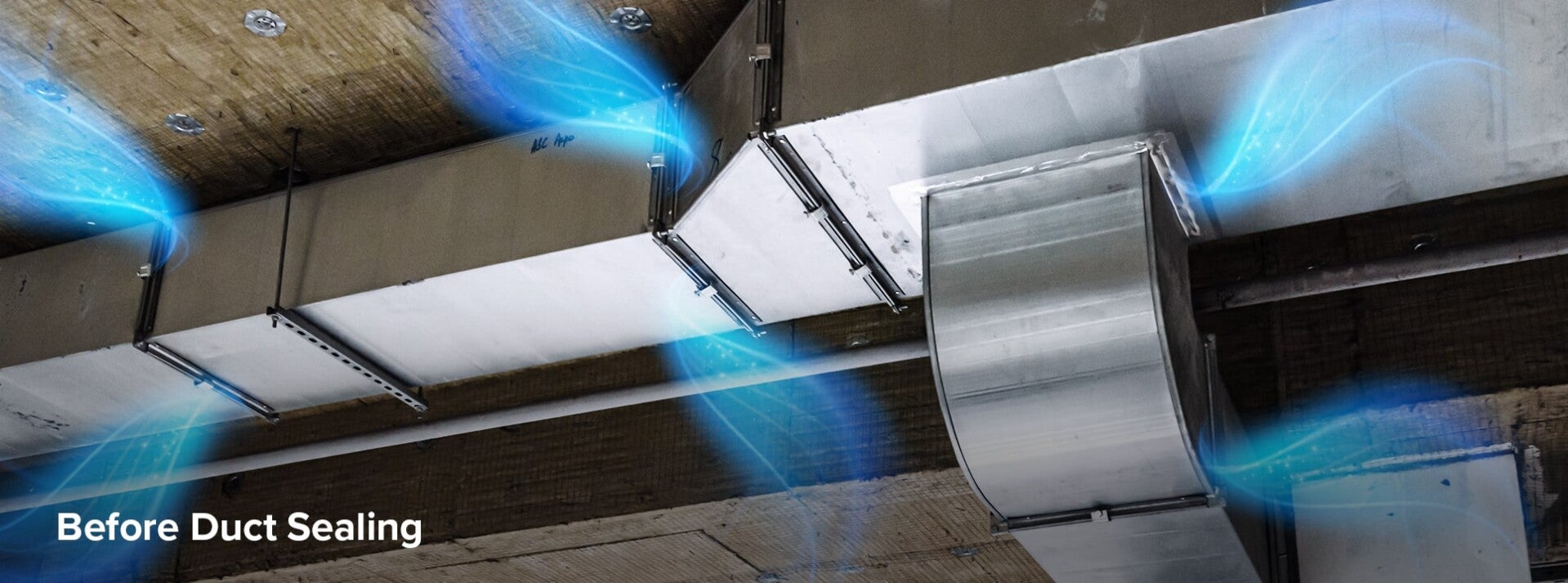
Hidden duct leakage can waste energy, reduce airflow performance and compromise indoor air quality. Aeroseal is an automated internal duct sealing process that seals leaks from inside the ductwork, helping systems perform more efficiently without extensive dismantling or disruptive access works. The process includes system preparation, leakage testing, controlled internal sealing and final verification reporting.
Aeroseal is a duct sealing technology that pressurises the duct system and delivers a non-toxic aerosol sealant to leakage points. The sealant is designed to collect at the edges of leaks rather than coat the whole duct system, allowing hidden leakage paths to be sealed from the inside. Aeroseal presents the method as suitable for both new-build and existing buildings, including commercial and residential applications.
This makes it especially useful where ductwork is concealed above ceilings, within risers, behind finishes, or in locations where traditional manual sealing would be slow, costly or impractical. That suitability for hard-to-access leakage points is an inference from Aeroseal’s internal sealing method and its retrofit positioning.
Why Duct Leakage Matters

Energy waste
When conditioned air leaks from the ductwork before it reaches the intended space, the system has to work harder to achieve the required outcome. AeroSeal’s Europe page states that leaky duct systems waste energy and increase HVAC loads, while CIBSE material stresses that airtight ductwork is essential to avoid loss of conditioned air and the associated performance penalty.

Poor airflow delivery
Leakage reduces the amount of air reaching terminals and can make systems harder to balance properly. In practical terms, this can mean underperforming rooms, inconsistent comfort and more time spent trying to correct airflow issues during commissioning. AeroSeal links tighter ducts with improved airflow efficiency, and that supports this performance-based framing.

Indoor air quality
CIBSE guidance highlights the importance of controlled ventilation for indoor air quality, and also notes that leaky ductwork can pull untreated air into building cavities, contributing to moisture and mould risk in some conditions. AeroSeal similarly links duct leakage with compromised IAQ.
How it works
Aeroseal’s official process is built around measurement and verification, not guesswork. The typical workflow is:

1. System preparation
The duct system is prepared for sealing. Openings and terminals are isolated as required, and sensitive equipment or components are protected before the sealing phase begins.

2. Internal sealing
The duct system is connected to the machine and the system is pressurised and an aerosol sealant is introduced into the ductwork. The sealant particles are carried by airflow to leakage points, where they build up and close the leaks from within. The process targets leaks without coating the entire duct interior.

3. Live monitoring and completion
During sealing, leakage is monitored in real time. The process continues until the target leakage level or practical completion point is reached. This live verification as a key part of the method.

4. Final report
A post-seal result is produced showing the improvement achieved between the initial and final readings. This gives the client a measurable outcome rather than a visual-only assessment.
Where Aeroseal is most useful
Aeroseal can be a strong option where hidden leakage is affecting performance and traditional access-based sealing would be disruptive or inefficient.
It is particularly well suited to:
-
Commercial duct systems with hidden or inaccessible leakage paths
-
Refurbishment projects where opening ceilings or risers would be costly
-
New installations requiring leakage improvement before handover
- Healthcare critical rooms and zones.
-
Buildings with airflow imbalance or comfort complaints
-
Projects focused on energy performance and operational efficiency
-
Sites where a measured before-and-after result is important
Aeroseal is widely used for commercial projects and for both retrofit and new construction.

Time-lapse of sealant collecting in gaps and cracks
Key Benefits
Reduced leakage
Aeroseal’s core purpose is to reduce hidden duct leakage and improve energy efficiency. It improves air tightness by 95% from the inside out.
Less disruption
Since the sealant is delivered internally, AeroSeal can reduce the amount of intrusive access work needed compared with opening up concealed duct routes to manually chase leaks. This is a reasonable inference from the process and from Aeroseal’s non-invasive positioning.
Better airflow performance
Tighter ductwork supports more predictable air delivery and can help systems operate closer to design intent. Aeroseal directly links sealing to improved airflow efficiency.
Improved building performance
Reducing leakage can support energy efficiency, comfort consistency and indoor environmental control. Aeroseal and CIBSE sources both support that overall direction, although the scale of improvement will always depend on the building and system condition.
Need to reduce duct leakage without opening up the whole system?
Aeroseal can be an effective solution for suitable duct systems where leakage reduction, improved airflow efficiency and measurable verification are required. Whether the project is new-build, refurbishment or remedial, we can review the ductwork and advise on the best route forward.